Exposure_Exposure
Exposure_Exposure
2026
Outdoor spaces around Objectifs - Centre for Photography & Film, Singapore
Group exhibition co-curated by Dylan Chan and Daniel Chong
Exposure_Exposure unfolds as a constellation of public works by five local artists. Occupying the outdoor margins of Objectifs Centre for Photography, these encounters are placed within eyeshot of the busy intersection of Middle Road and Waterloo Street. Exposure_Exposure hopes to hijack, interrupt and reframe the everyday encounter. What may seem a light serendipitous encounter, unravel into layers of friction through form. Together, they shape a field of meetings, offering new ways of sensing and encounter.
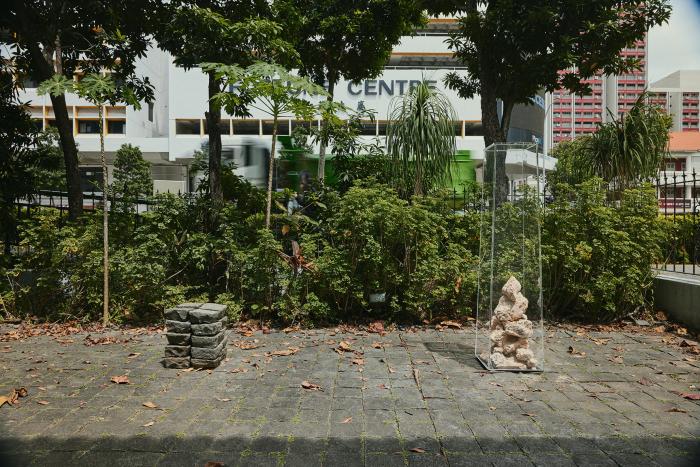
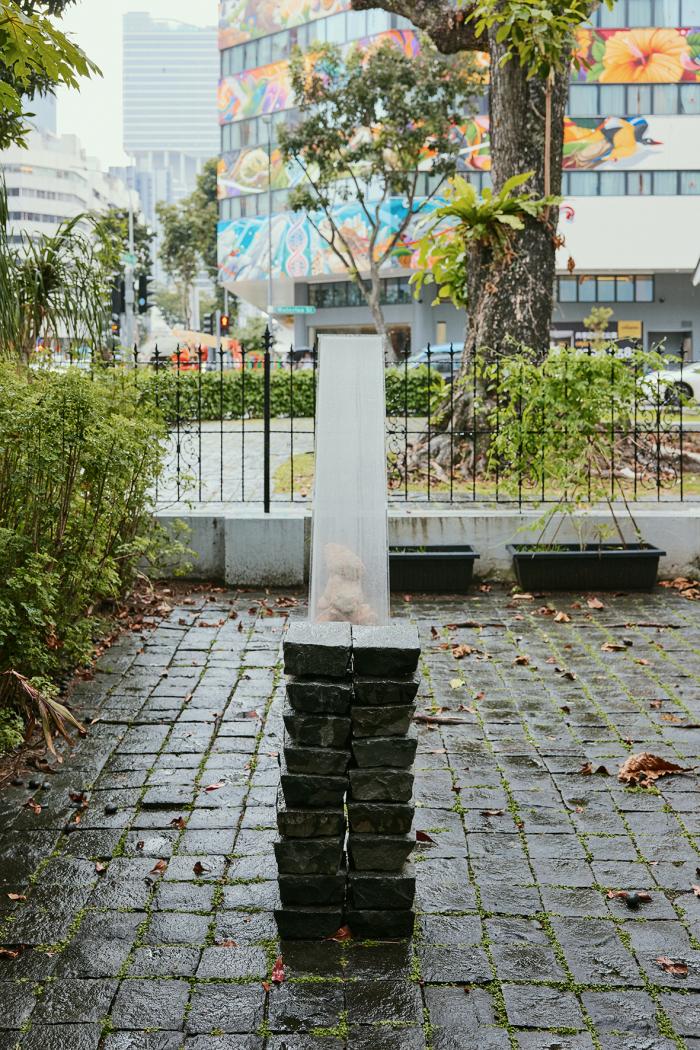
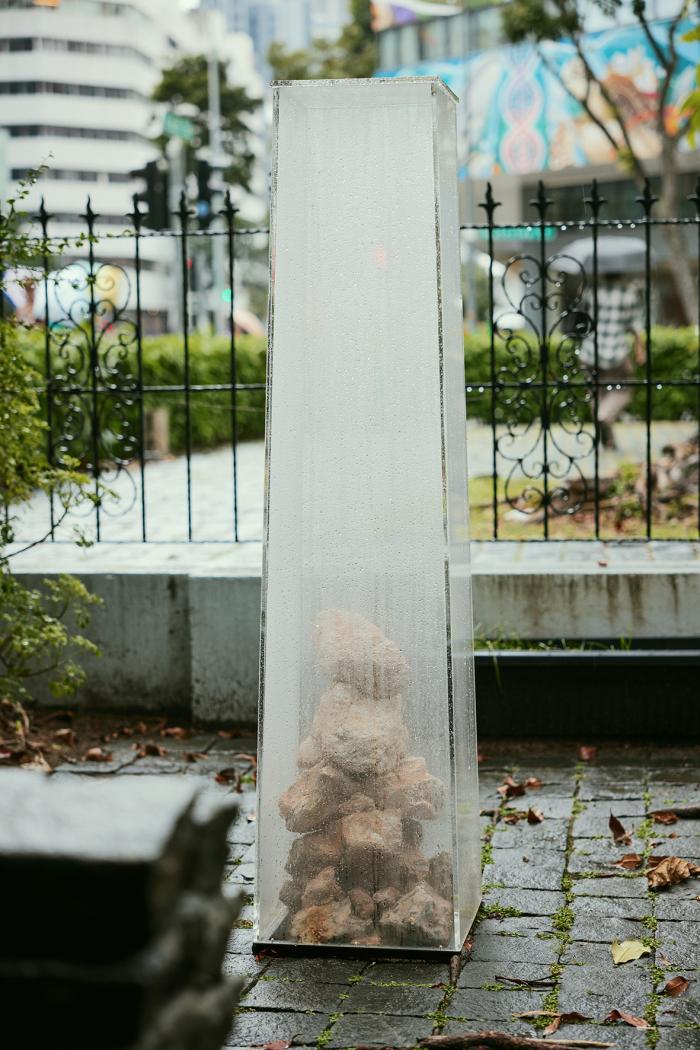
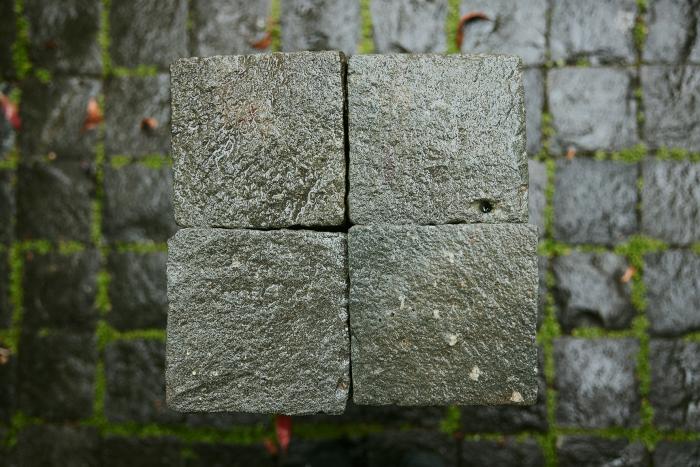
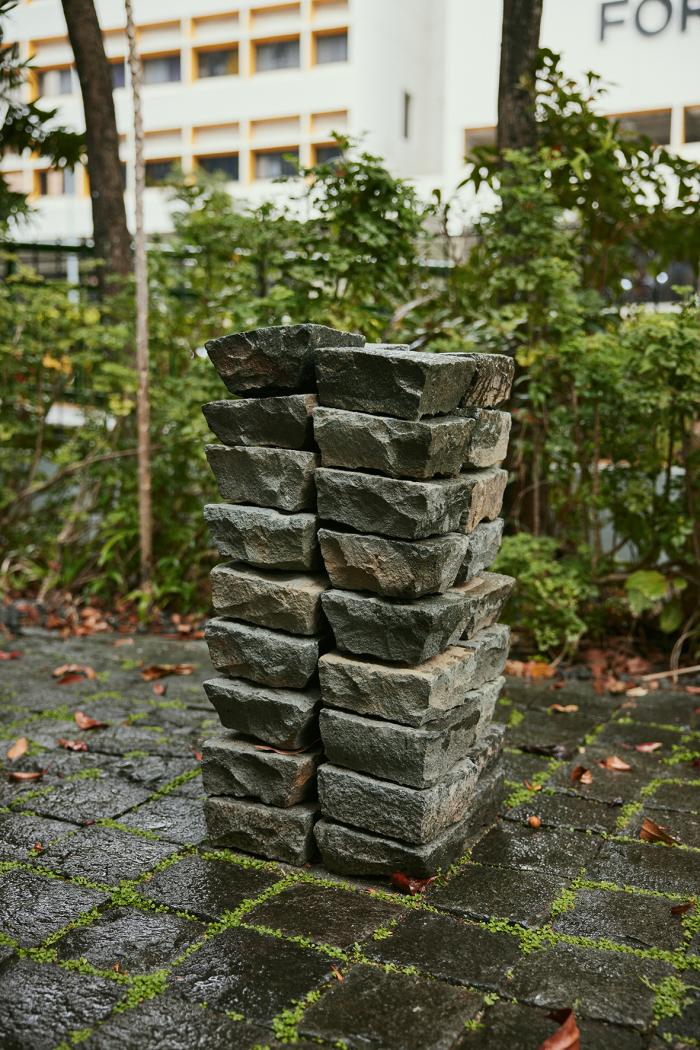
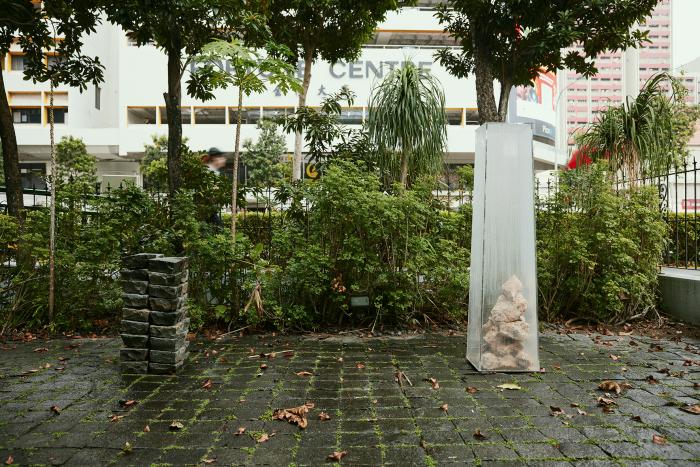
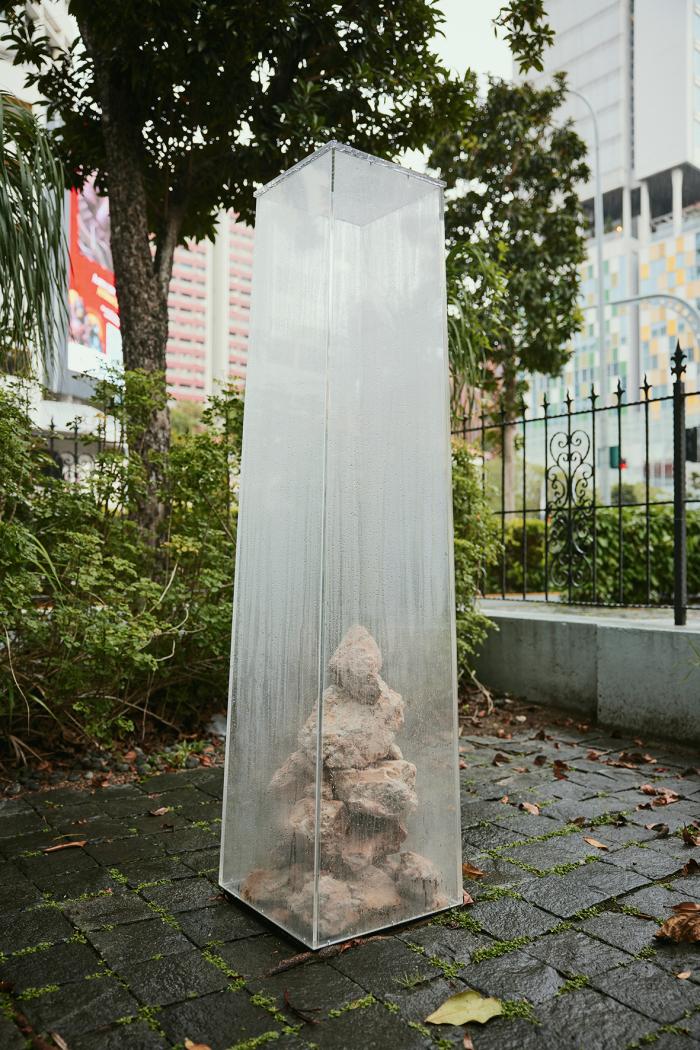
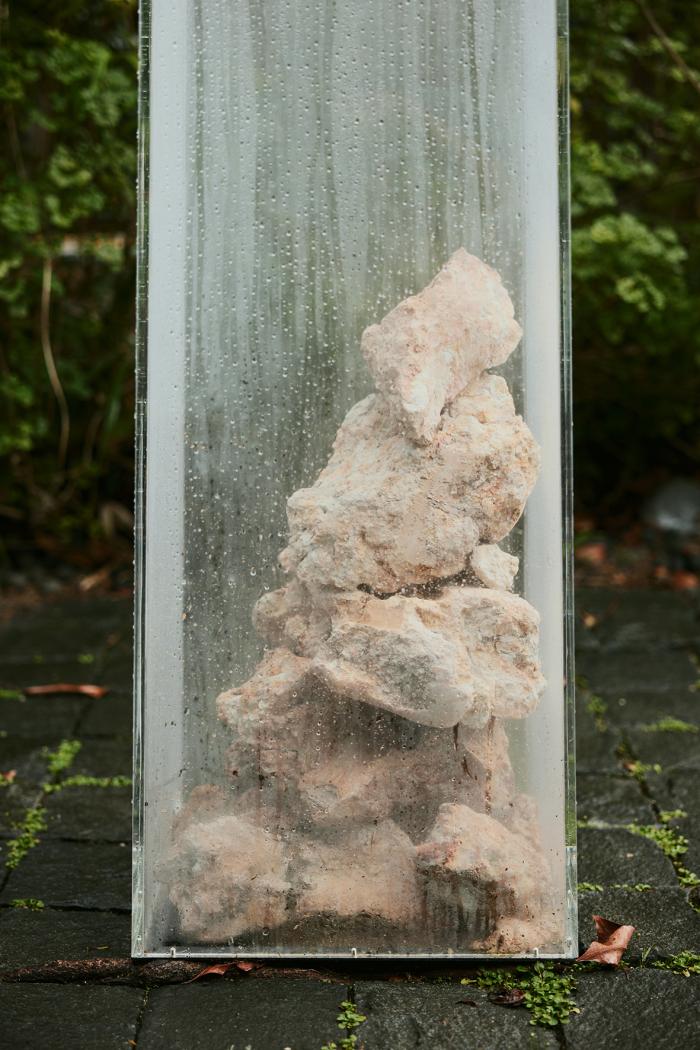
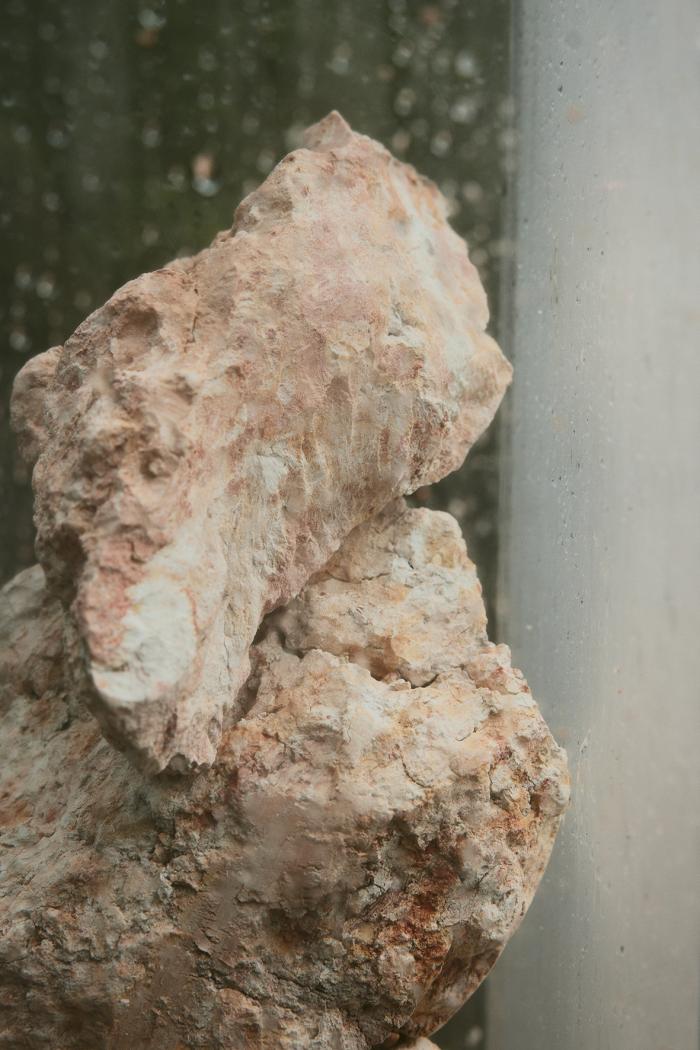
Four planes form an axis
2026
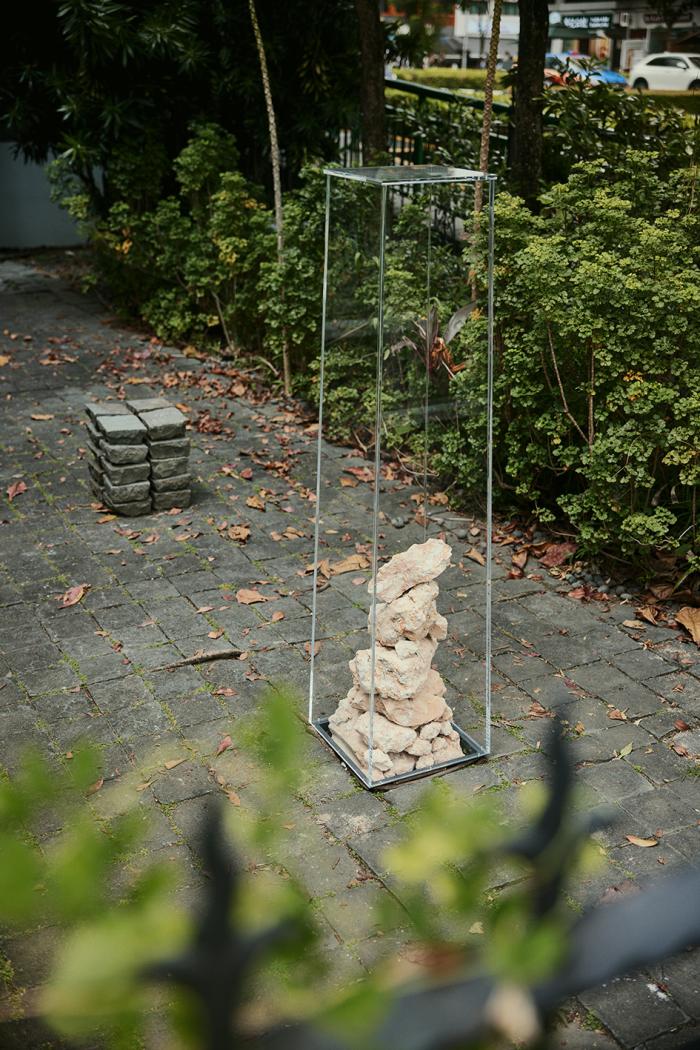
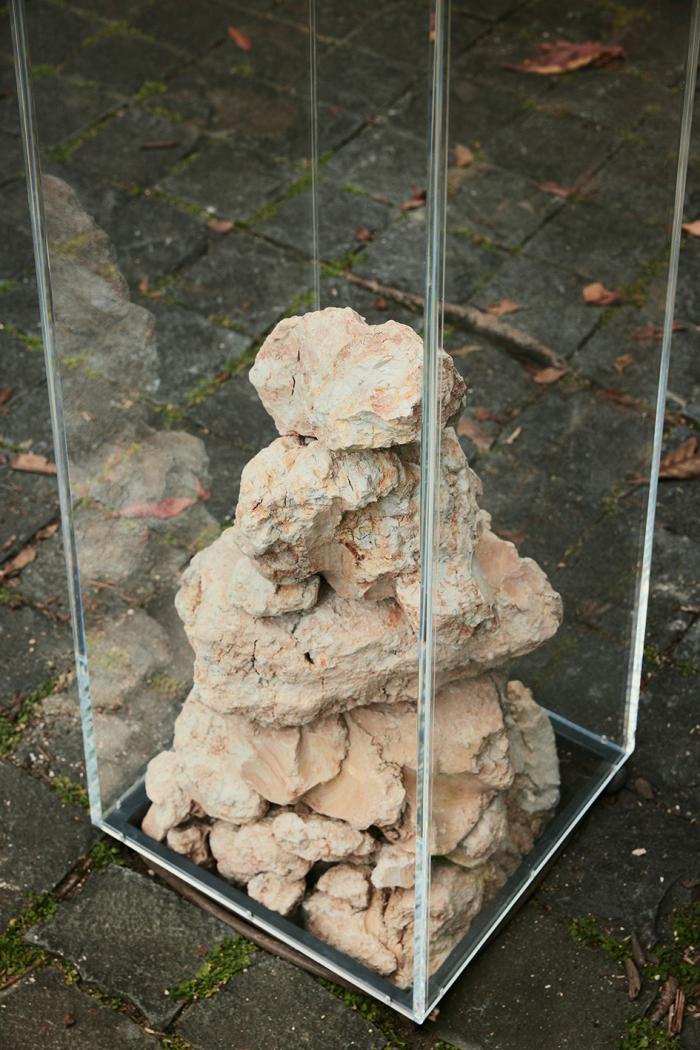
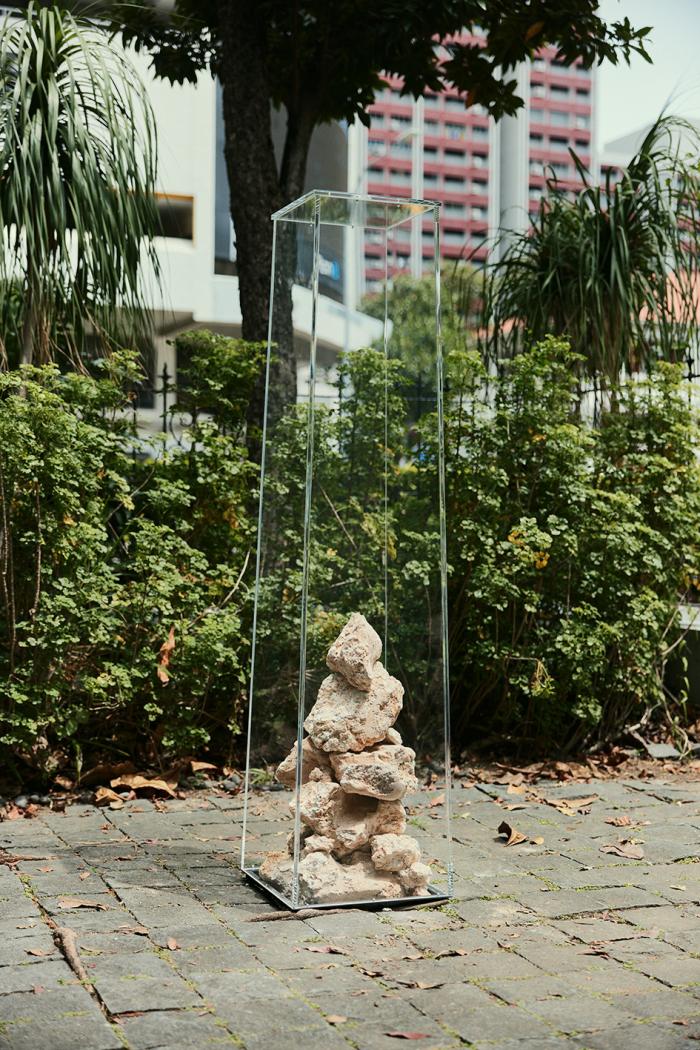
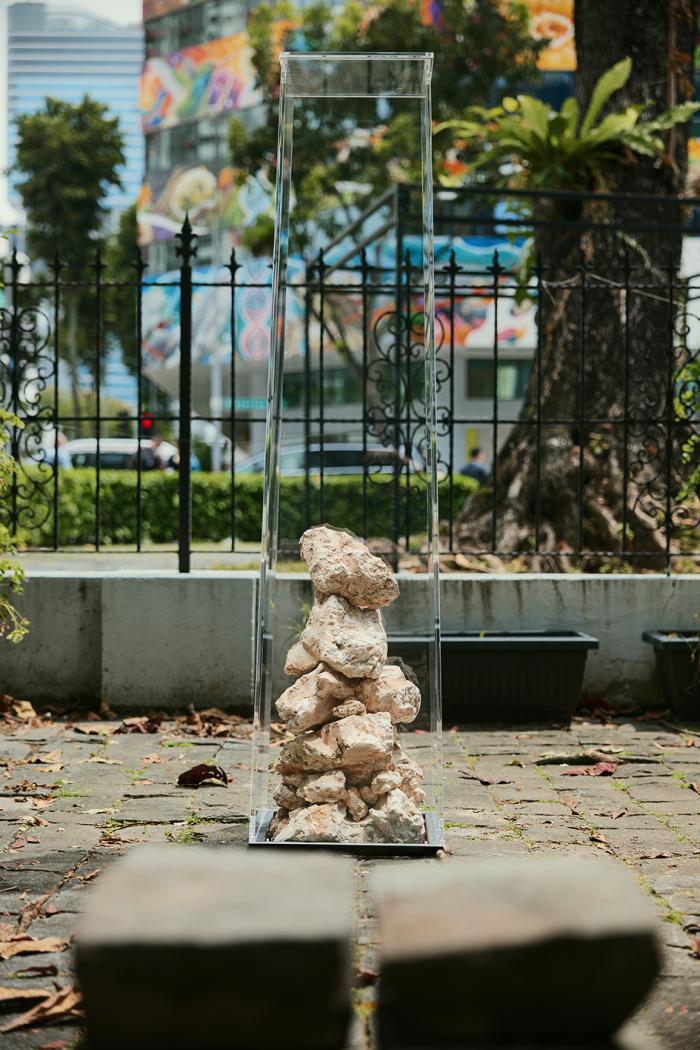
Excavated clay, acrylic vitrine and metal base
150 x 37 x 37 cm
*Presented with site specific interventions*
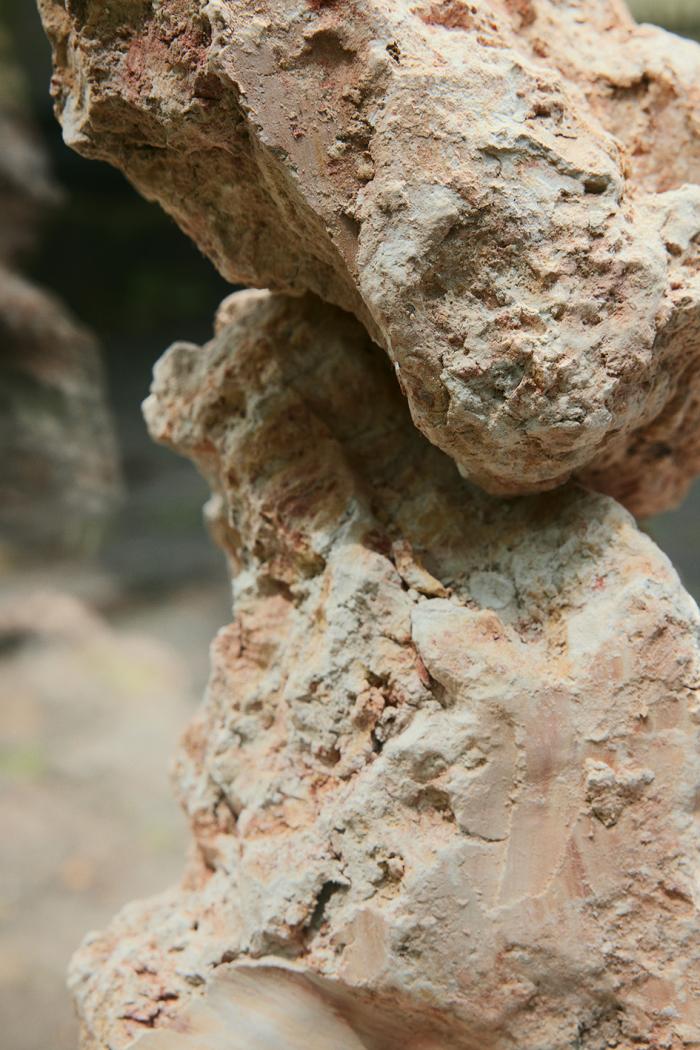
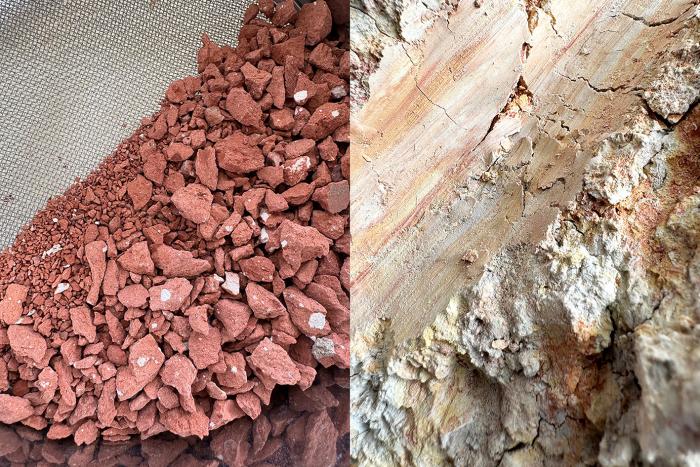
Clay is a material in flux. Composed of fine sedimentary particles deposited by water, it is transitional, unstable, and unfixed. In its unfired state, clay resists resolution. It remains soft, pliable, collapsible. Rehydrated, dewatered, then rehydrated again, its state cycles rather than concludes. Clay moves between phases, forming through accumulation, not intention. It fills cavities, assumes contours, compresses into form. It does not initiate structure but conforms to enclosure. It crumbles, becomes dust, becomes slip. It is neither object nor raw matter—it is a suspended material condition.
In Four planes form an axis, the axis is not a line imposed, but a vertical field of emergent tension. The four planes of the vitrine do not merely contain; they orient. Their verticality generates an axial condition, not through form but through suspension. Within this structure, clay—unfired, sedimented, formless—is not composed but accumulated, stacked in clumps that retain geological memory and material instability.
The axis here is not fixed. It is an interval, a space in which movement settles temporarily into structure, as described by Per Bak’s critical point: the moment a system self-organises, not by design, but through conditions that produce stasis. This is not permanence, but paused flux. The clay body rests in partial formation. It folds and collapses, melds and resettles. The vitrine becomes not display but process, a bounded cavity where disorder performs order.
Water condenses, insects traverse, gravity pulls. These are not disturbances but agents of articulation. Axis is not centrality or symmetry; it is relational verticality, arising from the four bounding planes that frame but do not fix. The column is not a monument. It is a site of contingency where the break, the pause, the enclosure – marks a temporary threshold between states.
In this context, Four planes form an axis does not declare structure. It proposes a spatial and material condition of earth held in tension, not to be resolved, but to be observed as it organises and disorganises itself within a constrained vertical field. Not a sculpture. Not land art. Not specimen. But a system of relations—between material, enclosure, ground—where form is always arriving.
Installation images by Lavender Chang taken on 12 January 2026 and 2 March 2026
Special thanks to Benson Ng / Jalan Bahar Clay Studios for the excavated raw clay
Three Works with Singapore Earth
A trilogy of works that engages clay not as medium but as situated material condition—geological, architectural, and ontological.
Across \ transverses the space, Textile wall – woven space, woven time, and Four planes form an axis, the trajectory of clay moves not from raw to refined, but from sediment to axis, from debris to field, from surface to suspension.
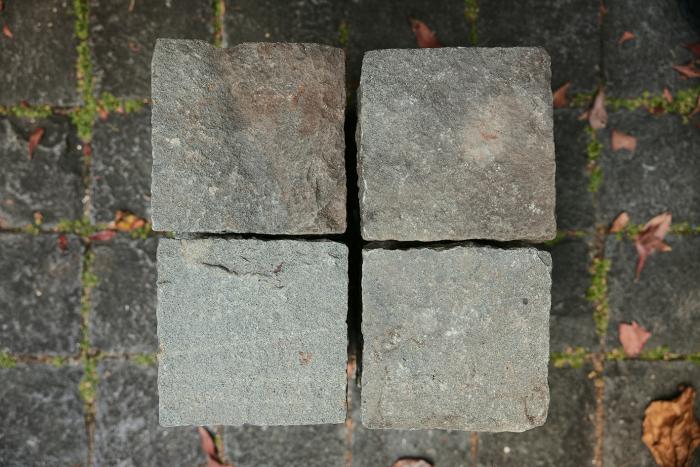
Each work begins with 'terra in-situ'—earth extracted from Singapore’s terrain. Shaped into bricks during the height of post-independence urbanisation, this clay once stabilised through fire, is returned to a pre-architectural condition for the works in the first two instalments. In the third instalment, the work departs from the brick’s post-fired solidity and returns to the pre-object condition of clay—unfired, pliable, sedimented, unformed.
Together, the three works form a spatial triad—the diagonal, the woven wall, and the vertical column. Each registers a different logic of containment and formation. What connects them is not formal continuity, but the sustained activation of clay as site, axis, and sediment.